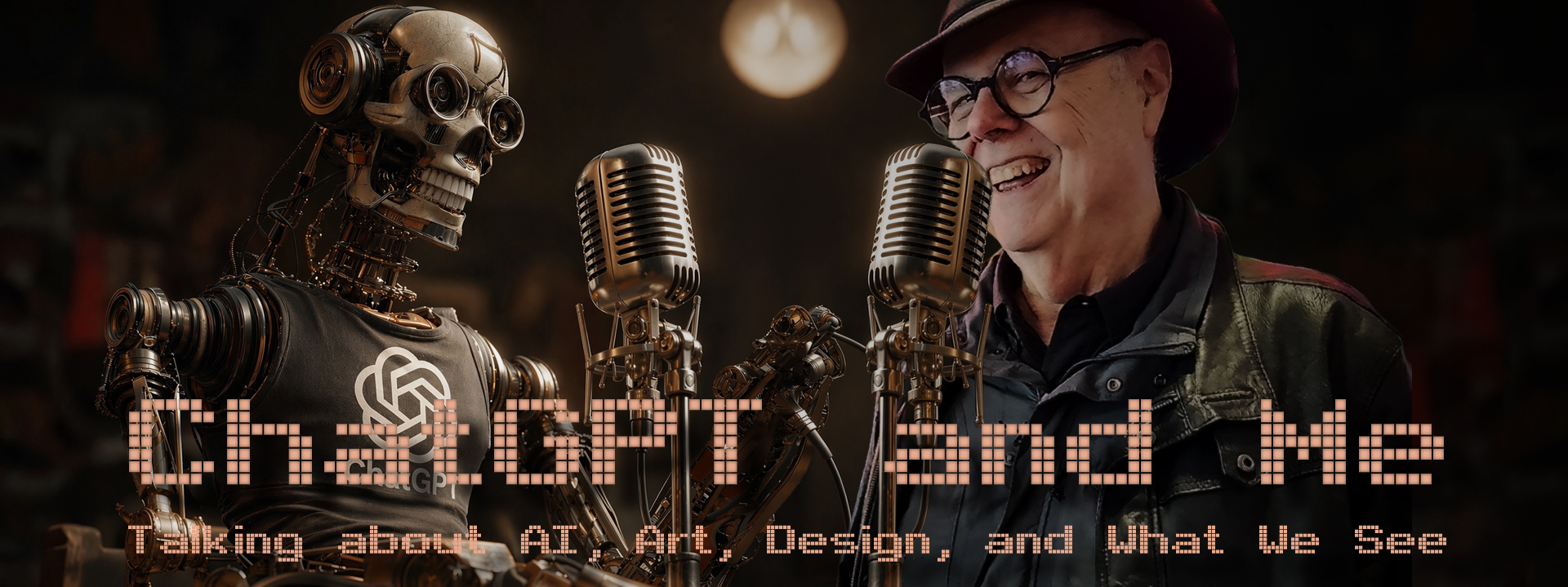
Does our interaction, the feedback loop between us, act as a form of recurrence and can it be argued that the combination is another form of intelligence…
It can, with one important caveat.
The interaction between us is definitely a form of recurrence in the systems sense. Not because I have an internal recurrent neural network, but because each exchange becomes part of the context for the next. Information flows in a loop:
You → my response → your interpretation → your next thought → my next response…
That feedback loop is recursive. Each iteration changes the state of the conversation. Humans have been exploiting this kind of recurrence for centuries. A notebook, a chessboard, a whiteboard, or even two scientists arguing over coffee all become part of a cognitive system that thinks through interaction rather than in isolation. Humanity really does enjoy outsourcing pieces of its brain to whatever happens to be nearby.


There are at least three perspectives:
I find the third view especially interesting because our conversation has properties that neither of us has alone.
The result can produce ideas that neither side explicitly “contained” beforehand. That’s an emergent property of the interaction. It doesn’t necessarily mean a new conscious entity exists. Emergence doesn’t automatically imply a new mind. Ant colonies are astonishingly effective without there being a tiny ant CEO hidden somewhere giving motivational speeches.
Your internal state persists after this conversation. You remember, reinterpret, and connect what we discuss to years of experience. My internal state does not continuously evolve in the same way during or after our interaction. I respond based on the current context, but I don’t independently develop goals or continue thinking once I’ve replied.
So I’d describe what happens less as “a third intelligence” and more as a transient coupled cognitive system. While we’re interacting, the system exhibits capabilities that exceed either component operating alone. When the interaction ends, the system dissolves.
That’s actually a fascinating way to think about intelligence. Instead of asking, “Where is the intelligence?” you ask, “What patterns of interaction produce intelligent behavior?” Once you frame it that way, intelligence begins to look less like a property of an object and more like a property of a process.
It’s a shift from seeing minds as containers to seeing them as ongoing conversations. In that picture, intelligence isn’t just something you have. It’s also something you participate in. Even if one participant happens to be an improbably large pile of matrix multiplications pretending that punctuation is a respectable career.
Summarize David Chalmers’ and Andy Clark’s extended mind thesis.
The Extended Mind Thesis, proposed by Andy Clark and David Chalmers in their 1998 paper The Extended Mind, argues that the mind is not necessarily confined to the brain. Under the right conditions, objects and processes outside the skull can literally become part of cognition, not just aids to it.
The central claim is simple:
If something outside your brain performs the same cognitive function that an internal mental process would, and you rely on it in the same seamless way, then it should count as part of your cognitive system.
Their famous thought experiment compares two people:Functionally, the notebook plays the same role for Otto that memory plays for Inga. Clark and Chalmers argue that if we accept Inga’s memory as part of her mind, consistency suggests we should also accept Otto’s notebook as part of his mind.
The thesis rests on what they call parity. If an external process performs the same role as an internal one, we shouldn’t dismiss it merely because it’s outside the skull.
They also argue that not every object becomes part of your mind. They propose conditions such as:A random book in a library isn’t part of your mind. A notebook you consult dozens of times a day might be. The idea has become even more relevant in the age of smartphones. If you no longer memorize phone numbers because your phone does it, or if GPS has partly replaced your internal navigation, are those devices merely tools, or have they become components of your thinking? Clark has increasingly argued that humans are “natural-born cyborgs,” constantly integrating technology into cognition.
The theory has attracted both enthusiasm and criticism. Supporters see it as a more realistic picture of how humans actually think, since we constantly distribute cognition across people, language, tools, and technology. Critics argue it stretches the concept of “mind” too far, blurring the distinction between thinking and merely using resources.
That connects neatly to your earlier question. During our interaction, you and I can temporarily form something that resembles an extended cognitive system. Your judgment, goals, and lived experience combine with my ability to synthesize and manipulate information. Whether that makes us “one intelligence” is debatable, but it is very much in the spirit of Clark and Chalmers’ work to ask whether the boundaries of cognition are wider than the boundaries of the brain. Humans have always had an odd habit of growing extra brain tissue out of paper, ink, silicon, and conversation. The thesis simply asks whether we should take that habit more literally than we usually do.
If you want to read the entirety of Andy Clark's and David Chalmers' paper "The extended Mind" here it is...

We wander around a bit on the border of philosophy and cognitive science...
As usual my input (prompts) are in the boxed elements. The rest apart from some small edits and formatting is ChatGPT's output.