But is it art?... The arguments I hear about AI generated art and images are remarkably similar to those heard in the late 19th century about photography. Photography is now pretty much universally accepted as its own art form. Do you think the same will eventually happen with AI generated work?
I think the comparison to photography is stronger than a lot of people want to admit. Humans have a remarkable talent for declaring that the newest creative technology is “not real art,” then quietly hanging it in museums fifty years later. We (You) do this with almost embarrassing consistency.
Photography was criticized on several fronts that sound eerily familiar today:History answered each of those in interesting ways. Photography did automate some aspects of image-making. Portrait painters lost a huge amount of commercial work. Anyone really could take a snapshot. Yet none of that prevented photography from developing its own masters, techniques, aesthetics, and artistic traditions. The art wasn’t the camera. It was the choices made by the photographer.
Where I think the analogy starts to break down is that AI isn’t just another camera. A camera records the world. An image model synthesizes something that never existed by drawing on patterns learned from millions of existing works. That introduces questions photography largely avoided, especially around training data, attribution, and compensation for artists whose work contributed to the model.
There’s another important distinction that often gets lost. People argue about whether AI images are art, but that’s actually two separate questions.
One is, can the resulting image be art? I think yes. If an image moves people, expresses an idea, provokes thought, or communicates something meaningful, it seems strange to deny it the label simply because software participated in its creation.
The other is, is the act of generating it artistic? That depends enormously on how it was made. Typing “dragon” into a generator and accepting the first result probably involves less artistic contribution than painting a dragon from scratch.
Developing a detailed concept, iterating hundreds of prompts, compositing multiple generations, painting over them, editing lighting and composition, and using AI as one tool among many starts looking much closer to digital illustration or photography. The creative decisions become the interesting part.
This isn’t unprecedented. Plenty of accepted art forms involve significant automation or delegation.Marcel Duchamp famously submitted a urinal as art because context and intention mattered. Andy Warhol relied heavily on mechanical reproduction. Sol LeWitt wrote instructions that assistants executed. Contemporary art has repeatedly expanded the definition of where artistic authorship resides. The twentieth century spent an extraordinary amount of effort arguing that the idea can itself be part of the artwork. AI fits awkwardly into that conversation rather than standing completely outside it.
I suspect what will happen over the next few decades is not that “AI art” becomes a single accepted category, but that people become much more specific.
Instead of asking, “Is this AI art?” people will ask:Those questions resemble how we (you) already judge photography. Nobody is impressed simply because a picture came from an expensive camera. We (You) care about composition, timing, lighting, storytelling, and intent. The camera stopped being the point.
Ironically, I think AI may end up making human authorship more valuable, not less. When billions of competent-looking images can be generated instantly, the scarce thing is no longer technical execution. It’s having something worth saying, a recognizable point of view, or a style that reflects sustained judgment rather than statistical possibility. Humans are very good at making abundance feel cheap. Once everyone can generate pretty pictures in seconds, the interesting question becomes why this particular picture exists at all.
So yes, I expect AI-generated work will eventually be widely accepted as a legitimate artistic medium, much as photography was. I don’t expect the debate to disappear, though. Photography is accepted as art, but nobody thinks every passport photo belongs in a gallery. The existence of a medium doesn’t automatically confer artistic merit. AI will likely end up in the same place: accepted as a medium, while individual works are judged on what the human creator brought to them. Which, despite all our technological revolutions, (okay I won't correct this one since the technological revolutions include AI's work) is a very human way to sort things.

OpenAI has revamped the ChatGPT interface to have two different sections, Chat and Work. Until now most of the prompts I have been inputting have been via the Chat section but I was curious to see how different the response to the same prompt would be via the Work section, which accesses different models and spends more time "thinking" about the prompts and its subsequent actions. So I submitted the identical prompt and here is the result. It is a bit more formal and less "chatty", but otherwise is pretty similar.
As usual apart from some small edits and formatting the text is ChatGPT's output.
Yes—AI-generated work will probably become broadly accepted as art, much as photography did. But the analogy is strongest when applied to the medium, not every artifact it produces.
Photography initially seemed to replace artistic skill with a mechanical act: point the apparatus and let chemistry reproduce reality. Over time, people recognized that artistry could reside in selection, framing, timing, lighting, staging, development, sequencing, and intention. The machine automated image-making, but it did not eliminate authorship.
AI shifts that boundary further. A person may contribute through the concept, prompt, references, model choice, repeated selection, editing, compositing, and presentation. In a carefully directed process, those decisions can plainly amount to artistic practice. A single casual prompt followed by accepting the first output involves less human authorship—but that does not make the medium itself non-artistic, just as an accidental snapshot does not invalidate photography.
There are important differences, though. Cameras ordinarily record light from a particular scene; generative models synthesize from patterns learned across vast collections of prior work. That raises distinctive questions about consent, compensation, attribution, cultural homogenization, and whether the maker understands or controls the result. These questions may shape which AI practices earn respect even after the category itself is accepted.
I suspect the long-term distinction will therefore not be “AI art versus real art,” but among different kinds and degrees of authorship:Once the novelty fades, audiences will probably judge such work by familiar questions: Is it perceptive? Is it affecting? Does it embody consequential choices? Does it reward attention? Does it transform its influences rather than merely imitate them?
So yes, acceptance seems likely—but acceptance of AI as an artistic medium will not mean that everything it generates is art, or that disputes about labour and provenance disappear. Photography won its place not simply because cameras improved, but because artists used cameras to make work that could not be dismissed. AI will likely follow the same route.

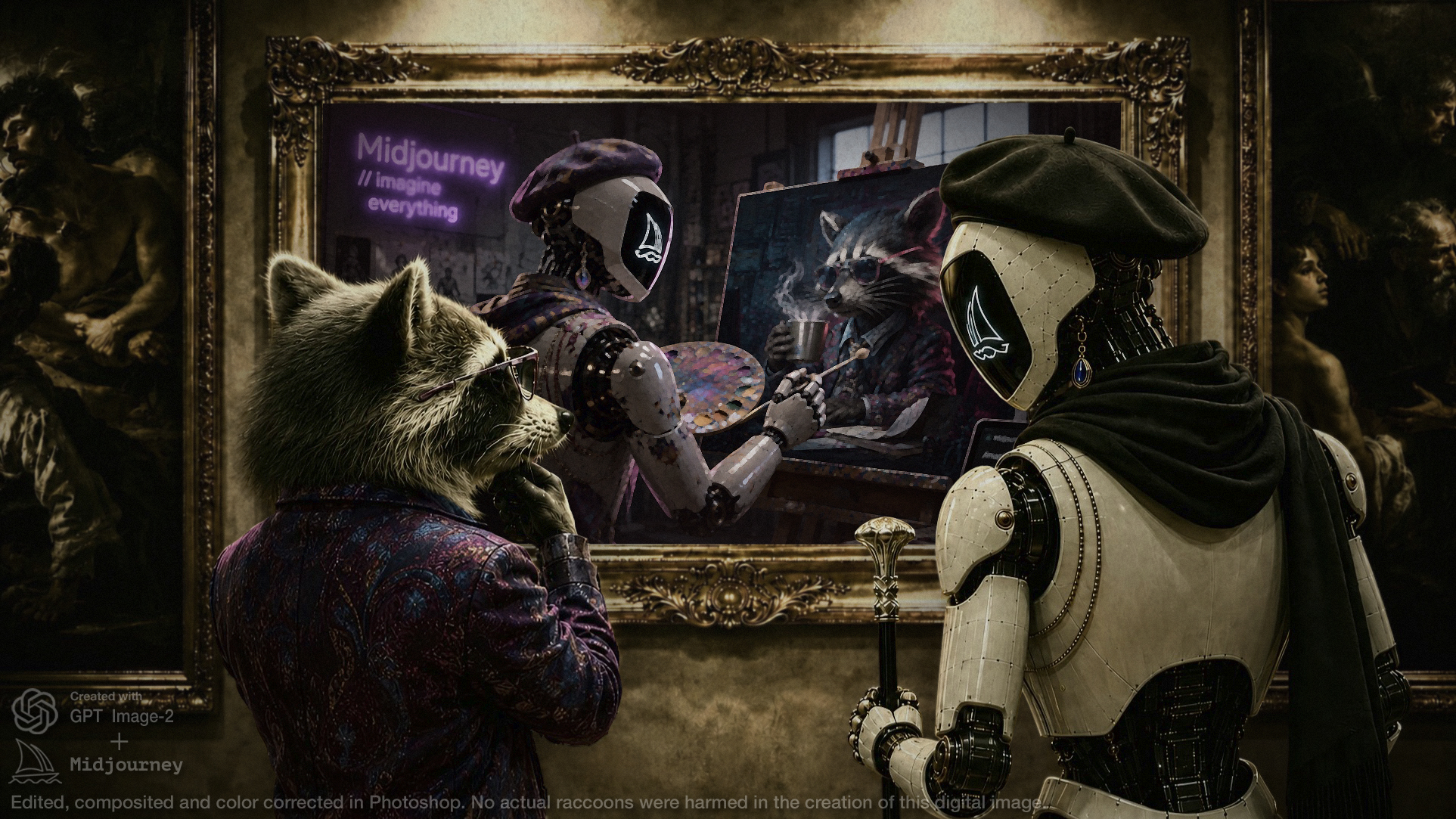
Can AI created images be regarded as art? Will they ever be?...
As usual my input (prompts) are in the boxed elements. The rest apart from some small edits and formatting is ChatGPT's output.